

Halftime
And the consequences of counterprogramming

Last weekend’s Super Bowl halftime show was debated endlessly for weeks, and I don’t need to rehash that in a classical music newsletter.
What I was more fascinated by was the attempt to counterprogram it - something that both the Super Bowl and music in general have long had as part of our history.
Read about the so-called controversy and debate here
Let’s go back to the early halftime shows. The first Super Bowl was in 1967, and it featured marching bands from University of Arizona, Grambling State University, Anaheim High School (along with their drill team), and jazz trumpeter Al Hirt. Yes When the Saints Go Marching In was on the program.
Al Hirt returned to halftime again in 1970 when the game was at Tulane Stadium in New Orleans. Once again with When the Saints Go Marching In. While the Grambling State band was the first to do a repeat, Hirt was the first to do a three-peat, alongside Ella Fitzgerald two years later. The game continued to showcase collegiate marching bands for about a decade, but another musical group also began appearing in 1971.
A group not-unlike Turning Point USA called Up With People formed, referring to itself as a multifaith religious movement. Headed by J. Blanton Belk, the organization described itself as a sort of group of ambassadors. Among their corporate sponsors were Exxon, Halliburton, Enron. GE, and Searle. Up With People gave musical performances at the Indianapolis 500, the Cotton Bowl, the Macy’s Thanksgiving Day Parade, and a total of six Super Bowls.
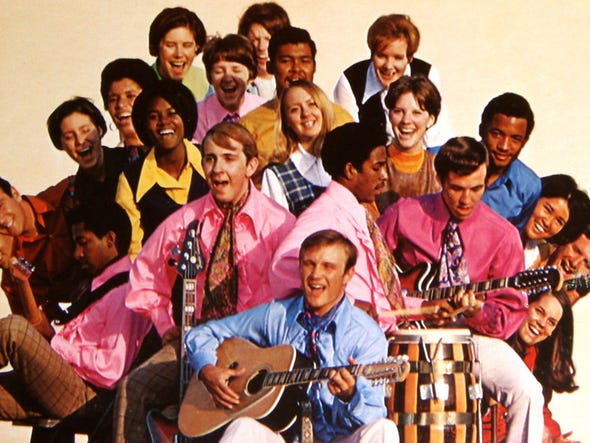
In 1976 Up With People performed the entire halftime show, with the title 200 Years and Just a Baby: A Tribute to America’s Bicentennial. Chris Nashawaty in 2012’s Entertainment Weekly wrote a thorough description of the horrors that occurred:
…the second half was tough to focus on thanks to squeaky-clean, milk-drinking musical numbers provided by Up With People, a Benetton-ad collection of students from all over the world gathered together to make the cast of Fame look like hardened criminals. If you’re too young to remember Up With People, let’s put it this way — they are the music that gets played in hell’s waiting room.
They were thought to be the inspiration behind R.E.M.’s song, especially given the music video. The point is, despite the lack of quality, for a good long while this was the halftime at the Super Bowl. And once the Cold War ended, the saccharine nature was well recognized - it wasn’t a draw.
As such: enter the counterprogramming.
In 1992 Fox aired an episode of In Living Color, featuring their usual sketch comedy, plus a performance by Color Me Badd, and even a clock that counted down to the third quarter. It drew 25 million viewers away from the game. As per Nielsen, CBS lost ten rating points - about 1/5 of its viewership because of it. And given the countdown clock, this didn’t even appear to be Fox’s intention! Just for those few minutes, they wanted to provide something real
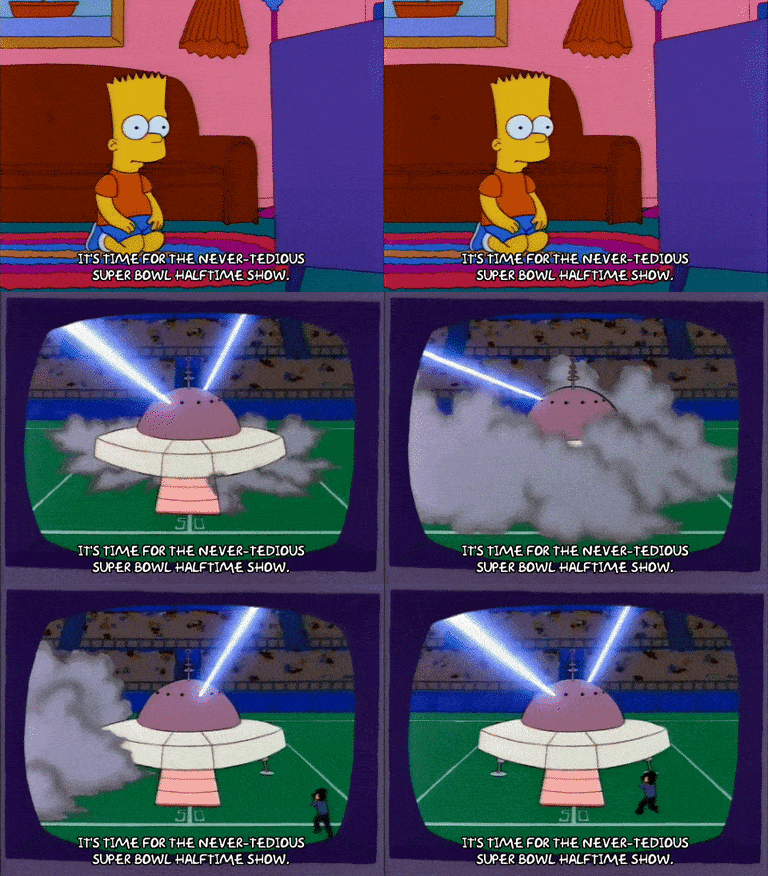
.
Counterprogramming taught the NFL a lesson: what the league and CBS had described as “family friendly,” viewers were reading as fake. So in 1993, the NFL brought in Michael Jackson. For the first time in the game’s history, viewership increased between the halves. That same year, CBS lost the broadcast rights to the NFL after they were outbid by Fox.
An arms race in pop culture began - halftime at the Super Bowl became a coveted gig for artists. The show evolved to become sexier, bolder, and more culturally relevant. Counterprogramming, indirectly, made the halftime show better.
This isn’t the first time such a thing has happened.
In the early 18th century George Friderich Handel and Giovanni Bononcini had audiences taking sides. They were both writing operas for the aristocracy, competing for ticket sales. Audiences compared them nonstop. And newspapers enjoyed the idea of their rivalry, referring to the two as Tweedledum and Tweedledee.
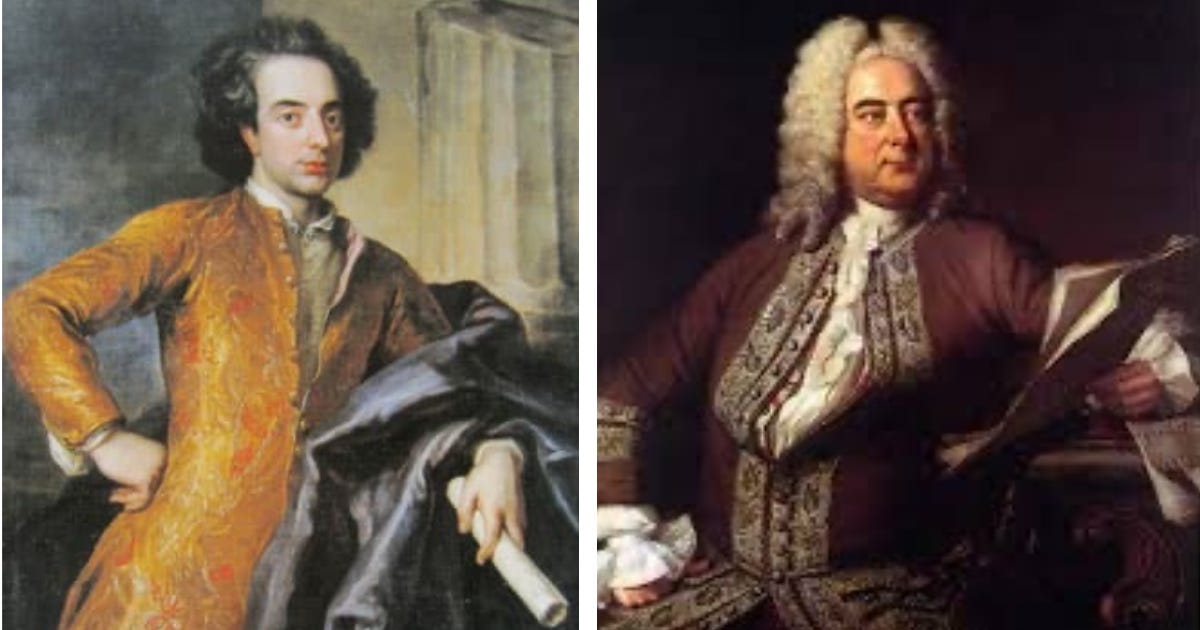
At that time, as has always been the case, opera was a public arena for politics. Bononcini had the backing of prominent members of the Whig party, including Lord and Lady Burlington. His style was one of refinement, and his Italian sound aligned with cosmopolitan ideals.
Whereas Handel was German, and supported by King George, himself a Hanover. This should have also aligned him with the Whigs but his music sounded more German, more dramatic, and more grand.
The music was secondary when attending the opera at the time - it was a badge of affiliation. As a place to be seen, attendance was a statement. Sound familiar?
Eventually Bononcini, who stuck to his opera guns, was caught in an act of plagiarism and run out of London. Italian opera slowly faded from the public’s favor there - seen as artifice as the economy turned austere.
By then Handel had begun writing oratorios, making his works less expensive to produce, and accessible to larger audiences beyond the aristocracy. He eventually died an old man, with thousands attending his state funeral. He is buried in Westminster Abbey.
Note: I won’t say in this case that integrity won. Handel committed his fair share of misdeeds.
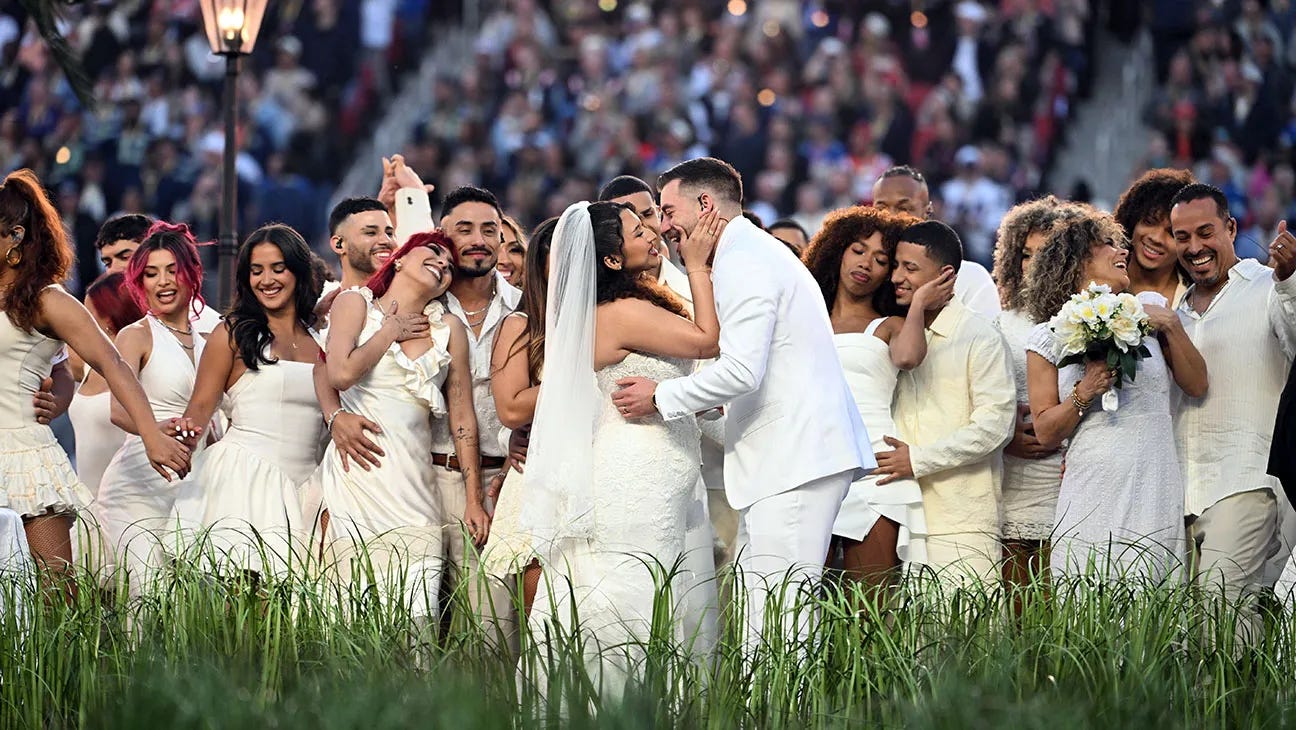
Given the history of Super Bowl halftime, it’s an easy estimate that well over 100 million people watched Sunday night’s performance. The teaser alone on Apple Music had 155 million views, plus 8.7 million likes on Instagram. As of this writing, the NFL’s YouTube shows over 21 million views of its own show on just that platform. Whereas the Turning Point USA show, streaming on YouTube, only peaked at about 6 million. I would speculate that many of these households overlapped as well - with one show on television, and the other on a phone or tablet.
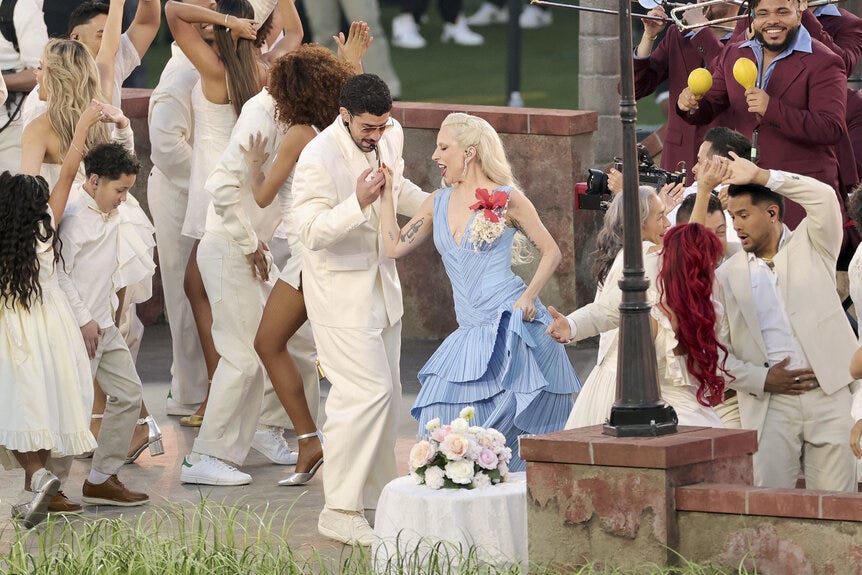
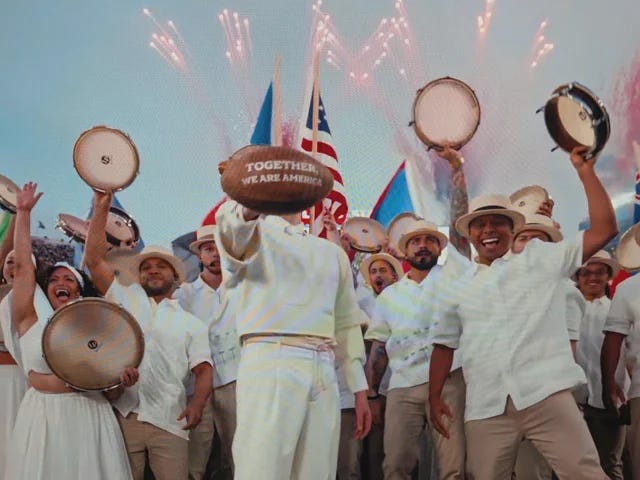
You’ll know who “wins” based on who lasts. Sure, it will have to do with the quality of the music, and the enjoyment of the spectacle. But there’s more to it than that. People will watch the one that makes them feel good. That’s why every time, the artists who look to unite us will outlast those who try to divide us.
-Colleen
If more people were for people, all people everywhere, they’d be a lot less people to worry about and a lot more people who care. Fifth grade music program, 1972. I’d add “never forget,” but how could I?
Of all the copy written about the Halftime Show, this was the only one that included Handel, Bad Bunny, Bononcini and Kid Rock! And why not? The parallels are too interesting (and fun) to ignore. Music is a form of expression and has been used in politics and propaganda probably since someone started smacking two rocks together. This had to be a fun column to write. I laughed out loud a couple of times. Kudos.